Arama Yap Mesaj Submit
Request a Callback
+90
X
X

Select Your Currency

Turkish Lira $ US Dollar Euro
X
X

Select Your Currency

Turkish Lira $ US Dollar Euro

Contact Us

Location Halkali merkez neighborhood fatih st ozgur apt no 46 , Kucukcekmece , Istanbul , 34303 , TR

Guide to Protection from DDoS Attacks

Eka Sunucu DDoS protection Secure your website, applications and infrastructure against modern cyber threats with the guide. This comprehensive guide helps you understand DDoS attacks and develop effective protection strategies.

DDoS (Distributed Denial of Service); targeting servers, inaccessible and serious financial losses It is a common type of cyber attack that can lead to Be prepared against these threats with modern protection methods.

Attack
Detection

Advanced technologies that detect DDoS attacks early

Traffic
Filtering

Filters harmful traffic and ensures normal traffic continues

distributed
infrastructure

Absorbs attacks with large network capacity

7/24
Protection

Uninterrupted protection and professional technical support

Contents

What is a DDoS Attack?

Understanding a DDoS Attack

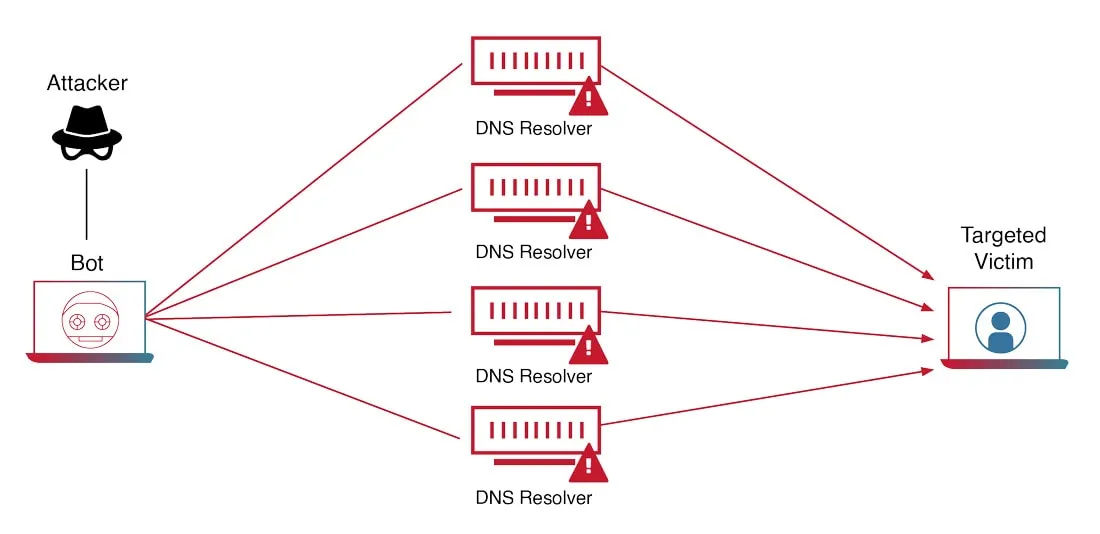
DDoS (Distributed Denial of Service) is a type of organized cyber attack to make a website, online service, network or server inaccessible. In these attacks, attackers use a large number of computers (usually infected computer networks called "botnets") to send intense traffic to the target system, exceeding the capacity of the system and causing it to crash.

Basic Principle: A normal web server has a certain capacity and becomes unable to provide service in the face of traffic exceeding this capacity. DDoS attacks work by exploiting exactly this weakness, rendering the server unable to serve real users.

DDoS attacks can make a site or service inaccessible to normal users, resulting in the following effects:

  • Business Loss: Inability to receive orders and loss of income for e-commerce sites
  • Loss of Reputation: Loss of customer confidence due to service interruption
  • Operational Disruptions: Serious disruptions in business processes
  • Data Loss: In some cases, data loss may occur due to system crash.
  • Financial Loss: Spending extra resources to stop the attack

Motivations for DDoS attacks can vary:

Financial Motivation

Attacks to damage rival companies or demand ransom

Activism (Hacktivism)

Attacks to send a message to an organization for political or ideological reasons

Distraction

Performing a DDoS attack to disguise another cyber attack

Entertainment or Showdown

Some attackers launch attacks just to show off their technical skills
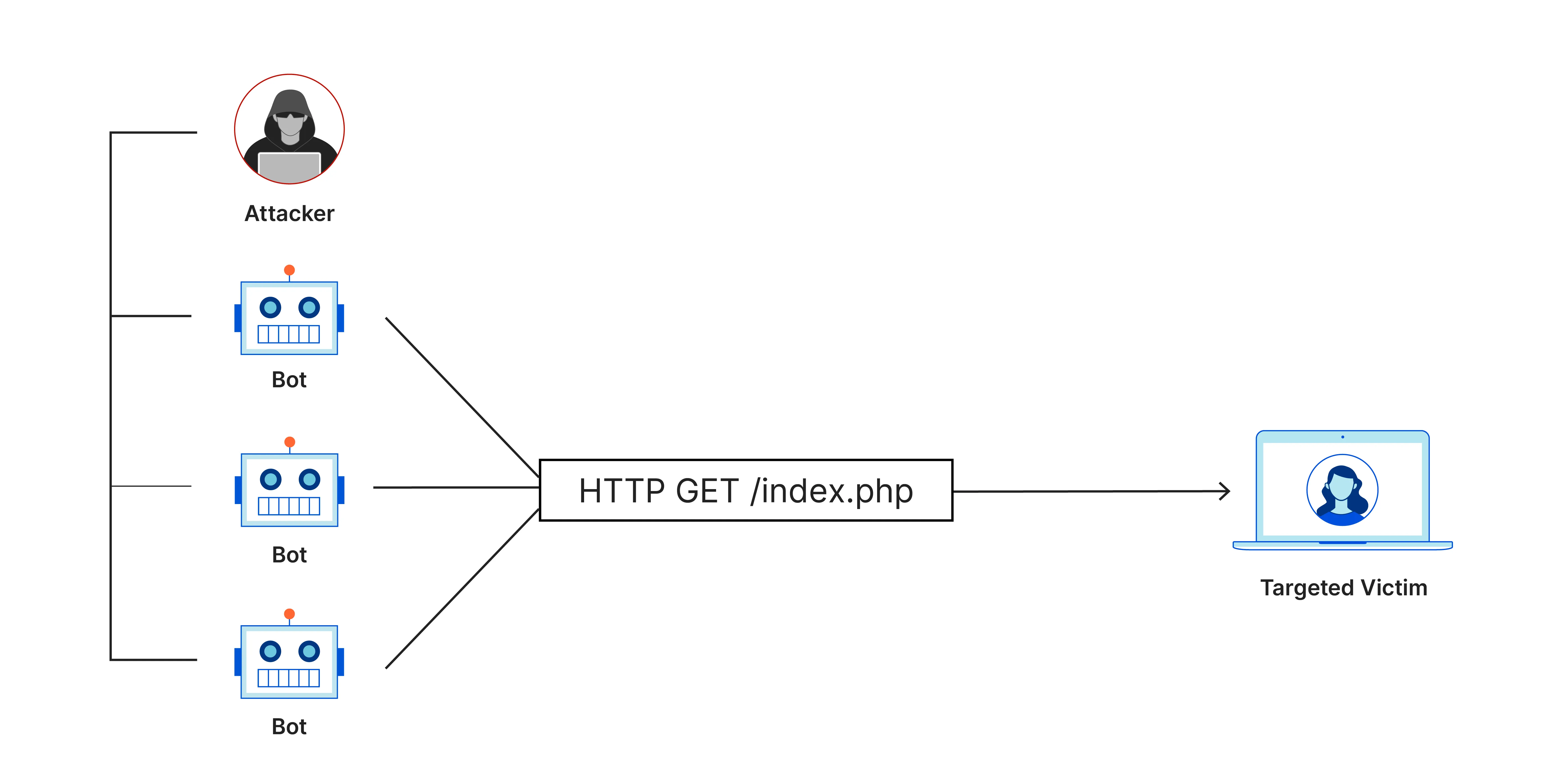
DDoS Attack Working Principle
Working Principle of DDoS Attack

Anatomy of DDoS Attacks

  • Preparation Phase: Botnet creation and target identification
  • Discovery Phase: Identifying the target's weak points
  • Attack Phase: Preventing the system from responding by sending heavy traffic
  • Sustainability: Sustaining the effect of the attack for a long time
Attention: The largest DDoS attack recorded in 2023 was with 71 million HTTP requests per second. Such large-scale attacks can bring down almost any system without safeguards in place.

DDoS Attacks: By the Numbers

Average DDoS Attack Duration
4 Saat
Average Cost (for SMEs)
$120,000+
Annual Number of Global DDoS Attacks
5.4 Million+
Possibility of Recurrent Attacks
%80

DDoS Attack Types

Classification of DDoS Attacks

DDoS attacks are divided into three main categories according to the system layer they target and the methods they use. Each type of attack uses different techniques and requires different defense mechanisms. Understanding these attack types is crucial to creating an effective protection strategy.

Volumetric Attacks

These are attacks that aim to consume network bandwidth. They fill the target system's bandwidth, preventing normal traffic from being transmitted.

Common Attack Types:

  • UDP Flood: It consumes bandwidth by sending a large number of UDP packets to the target system.
  • ICMP Flood: Also known as "Ping of Death", it crashes the system by sending massive ping requests.
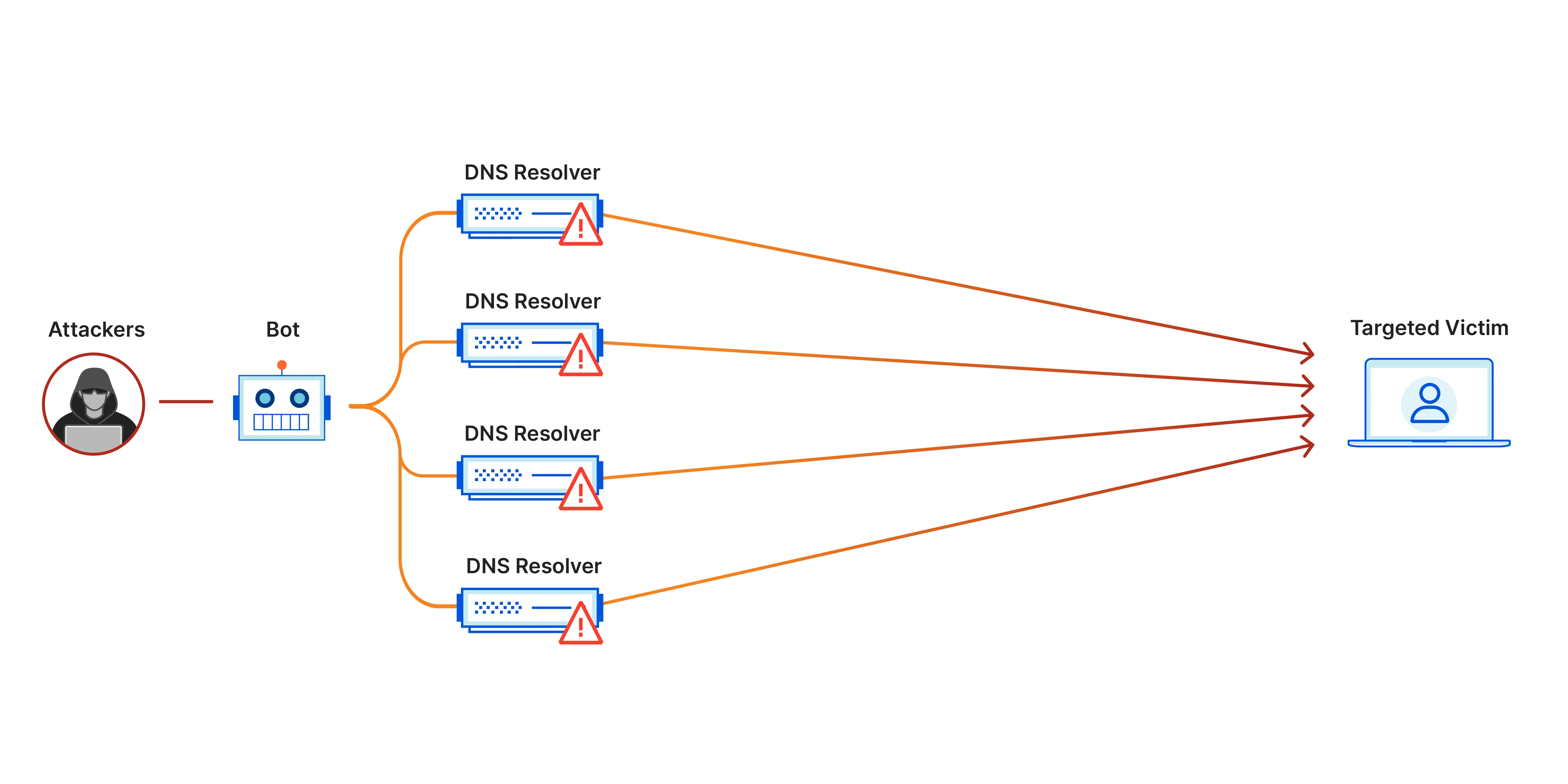
  • Amplification Attacks: It turns small requests into large responses using DNS, NTP or SSDP protocols.
1.3 Tbps
Largest Volumetric Attack on Record

Protocol Attacks

These are attacks that aim to consume server resources and connection tables. It targets the server's resources such as processor and memory.

Common Attack Types:

  • SYN Flood: It exploits the TCP connection establishment process, causing the server to be flooded with half-open connections.
  • Fragmented Packet Attacks: It consumes the server's packet assembly mechanism with fragmented packets.
  • Ping of Death: It causes the system to crash by sending large or corrupt ICMP packets.
%30
Share in All DDoS Attacks

Application Layer Attacks

They are complex attacks that target the web application itself, often achieving more effective results using less traffic.

Common Attack Types:

  • HTTP Flood: It keeps the web server busy by sending seemingly normal GET or POST requests.
  • Slowloris: It blocks the web server by sending a large number of slow and incomplete HTTP requests.
  • Slow POST/Slow Read: It consumes server resources by sending HTTP requests very slowly.
%70
Hardest Type of Attack to Detect

Comparison of DDoS Attack Types

feature Volumetric Attacks Protocol Attacks Application Layer Attacks
Hedef Bandwidth Server Resources Web Application
scale Very High (Tbps) Orta (Gbps) Low (Mbps)
Detection Difficulty Easy Orta Zor
Effect Rate fast Orta slow
Protection Method Traffic Filtering, Distribution Case Study, Rate Limiting Behavior Analysis, WAF
Modern Threat: Most DDoS attacks today occur as "Multi-Vector" attacks using a combination of the above types. These types of attacks use multiple attack techniques simultaneously to bypass defense systems and are much more difficult to detect and prevent.

DDoS Protection Methods

Defense Strategies Against DDoS Attacks

Effective DDoS protection requires a layered security approach. No single solution can provide complete protection against all types of DDoS attacks. Therefore, it is important to use a combination of various defense mechanisms against different attack vectors.

Protection Strategy: An ideal DDoS protection strategy should balance elements such as infrastructure scalability, traffic filtering, behavioral analysis and rapid response. The more layers, the stronger the protection.

Increasing Bandwidth Capacity

One of the most basic defense mechanisms against DDoS attacks is to increase the capacity of your network to a level that can handle the attack. This approach is also known as "traffic absorption".

  • Advantages: It can absorb small and medium-sized attacks, providing an extra layer of protection.
  • Disadvantages: It is insufficient on its own against large-scale attacks and may be costly.

Traffic Filtering and Cleaning

Traffic filtering is systems that detect and block harmful traffic while allowing legitimate traffic to pass. This filtering can be done at the network edge or by DDoS protection services.

  • Packet Filtering: 3 of the OSI model. and 4. filters that recognize known attack patterns, operating at layers.
  • Behavior Analysis: Detecting traffic showing abnormal patterns by learning the normal traffic flow.
  • Rate Limiting: Limiting traffic from certain sources.

Load Balancing and Distributed Architecture

Load balancing prevents a single server from being overloaded by distributing incoming traffic among multiple servers. This approach makes your service more resilient.

  • Global Load Balancing: Distributing the impact of the attack by routing traffic to different data centers.
  • CDN Usage: Mitigating the impact of DDoS attacks by distributing content globally.
  • Anycast Network Structure: Redirecting traffic to the nearest data center by publishing the same IP address in multiple locations.

Special Hardware Solutions

Special hardware that protects against DDoS attacks analyzes network traffic, detects and filters abnormal traffic.

  • Anti-DDoS Gateways: Devices positioned at the edge of the network and performing traffic clearing.
  • Application Deployment Controllers (ADC): Devices that optimize application traffic and can filter abnormal traffic.
  • Web Application Firewall (WAF): Firewalls that protect against application layer attacks.

Cloud Based DDoS Protection Services

Cloud-based DDoS protection services clean the traffic by passing it through its own infrastructure and forward only safe traffic to target servers. These services often have large network capacities and provide protection against various types of attacks.
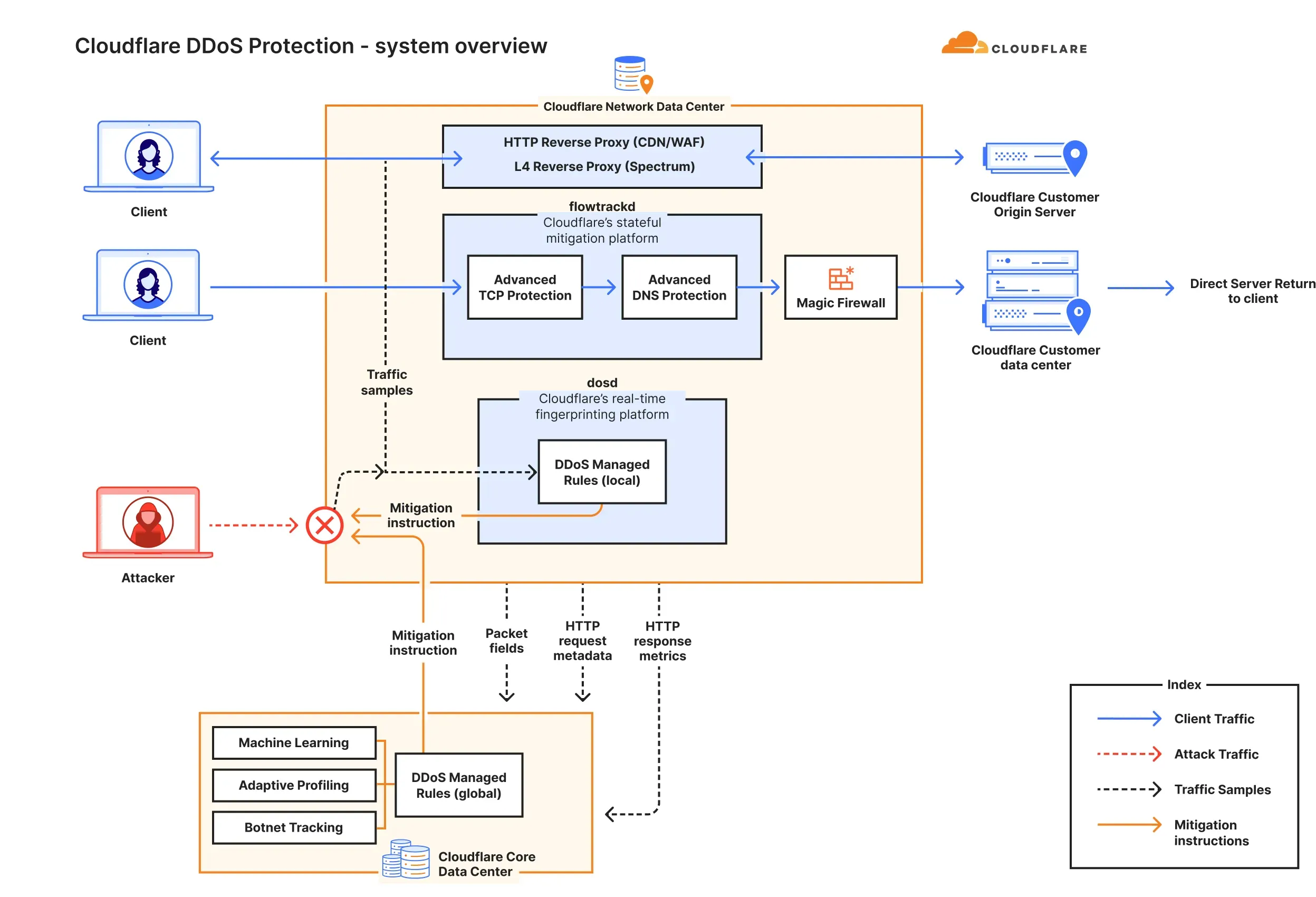
  • Advantages: Effective against large-scale attacks, easy installation, scalable capacity.
  • Disadvantages: Service cost, possible latency, may cause false positives in some cases.
DDoS Protection Strategies
Layered DDoS Protection Strategy

DDoS Protection Comparison

Protection Type event Cost Installation
ISP Protection high Zor
On-Premise Solutions Very High complicated
Cloud Solutions Orta Easy
Hybrid Protection high Orta
Expert Recommendation: The most effective DDoS protection strategy is a hybrid approach that combines cloud-based DDoS protection services with on-site measures. In this way, protection is provided against large-scale attacks and more complex attack types such as application layer attacks are detected and blocked.

Successful Protection Example

In 2016 , the attack on the famous DNS provider Dyn, which affected many large websites and made a significant part of the internet inaccessible, occurred with 1.2 Tbps of traffic per second.

However, during the same period, a gaming company that suffered a similar magnitude of attack was able to return to normal operations within 30 minutes thanks to a multi-layered DDoS protection strategy. The protection strategy they used included:
  • Cloud-based DDoS protection service
  • Anycast network architecture
  • Auto scaling capacity
  • Real-time traffic analysis and anomaly detection

Precautions That Can Be Taken

DDoS Precautions Checklist
Important: It is much more difficult to take precautions after a DDoS attack begins. Therefore, it is crucial to be prepared before the attack occurs by taking a proactive approach.

Useful DDoS Protection Tools

  • Fail2Ban: Prevents brute-force attacks on services such as SSH, FTP and web server
  • ModSecurity: Open source WAF solution for web applications
  • Snort/Suricata: IDS/IPS systems that monitor network traffic and detect abnormal activities
  • Nginx Limit Req Module: HTTP requests limiting module
  • Netfilter/iptables: Tools used for packet filtering on Linux systems

Proactive Measures Against DDoS Attacks

Precautions that can be taken against DDoS attacks should be considered in three stages: pre-attack preparation, intervention during the attack and post-attack evaluation. The following measures include basic protection strategies that businesses of all sizes can implement.

Technical Measures

Strengthen Network Architecture
  • Host your servers in different data centers and different networks
  • Eliminate single points of failure using redundant servers and load balancers
  • Distribute traffic loading using Anycast DNS
  • Use CDN (Content Delivery Network) services if possible
Install Traffic Filtering Mechanisms
  • Limit requests from the same IP by applying rate limiting
  • Block known bad IPs using IP reputation filtering systems
  • Enable TCP SYN flood protections such as SYN proxy or SYN cookies
  • Close unused or unnecessary ports and services
Take Application Level Measures
  • Protect against application layer attacks using Web Application Firewall (WAF)
  • Add CAPTCHA or JavaScript-based bot detection
  • Optimally configure session management
  • Keep API requests under control by applying API rate limiting
Establish Monitoring and Early Warning Systems
  • Detect abnormal traffic using network traffic monitoring tools
  • Continuously monitor critical system metrics (CPU, memory, network traffic)
  • Check your DNS records regularly
  • Set up behavioral monitoring systems for anomaly detection

Organizational Measures

Create a DDoS Response Team
  • Identify the team that will take part in the event of an attack and define responsibilities
  • Conduct regular training and drills
  • Make the team 7/24 available
Develop a DDoS Response Plan
  • Create response procedures for different attack scenarios
  • Determine communication plan and escalation routes
  • Keep contact information up to date with ISP and DDoS protection service providers
  • Test and update the plan regularly
Manage Relationships with Partners and Providers
  • Check with your ISP about DDoS protection capabilities and response protocols
  • Sign SLA (Service Level Agreement) with DDoS protection service providers
  • Evaluate your cloud service provider's DDoS protection capabilities

Sample Nginx Configuration: Rate Limiting

http {
    # Rate limiting zone tanımı
    limit_req_zone $binary_remote_addr zone=one:10m rate=1r/s;

    server {
        listen 80;
        server_name example.com;

        location / {
            # Bu lokasyona erişim for saniyede 1 istek limiti, 5 istek kuyrukta bekleyebilir
            limit_req zone=one burst=5 nodelay;

            # Normal sunucu ayarları
            proxy_pass http://backend;
            proxy_set_header Host $host;
            proxy_set_header X-Real-IP $remote_addr;
        }

        # API istekleri for daha sıkı limit
        location /api/ {
            limit_req zone=one burst=2 nodelay;
            proxy_pass http://api_backend;
        }
    }
}

Professional Anti-DDoS Solutions

Professional DDoS Protection Services and Solutions

Professional solutions are often required to protect against large-scale DDoS attacks. These solutions have the ability to detect and filter malicious traffic by passing the traffic through the scrubbing center. Below you can find information about the leading DDoS protection solutions on the market.

Selection Criteria: When choosing a DDoS protection solution, you should consider the size of your company, the criticality of your online presence, your budget, and the level of risk you face. It is also important that the solution suits your specific needs.

Cloud Based DDoS Protection Services

Cloud-based solutions clear traffic by routing it through the service provider's large-capacity network. These solutions are popular because they require minimal hardware investment and offer quick installation.

Cloudflare DDoS Protection
HTTP/HTTPS and DNS DDoS Protection Global Anycast Network Free and Premium Plans WAF Entegrasyonu

Cloudflare protects against volumetric, protocol and application layer attacks with its extensive global network. It offers both free and premium plans and is simple to set up.

Akamai Prolexic
Advanced DDoS Mitigation 7 Layered Protection SOCC Expert Support 5Tbps+ Capacity

Akamai Prolexic offers enterprise-grade DDoS protection. This service, which comes with a 24/7 monitoring and response team, provides effective protection against even the largest and most complex attacks.

AWS Shield
Standard and Advanced Levels Integration into AWS Services Real-Time Metrics DDoS Response Team (Advanced)

Ideal for businesses using AWS infrastructure, AWS Shield does not require additional fees for the standard plan. The Advanced plan provides more advanced protection against large-scale and complex attacks.

On-Premise Anti-DDoS Solutions

On-premise solutions are hardware or software-based protection systems positioned within the organization's own network. These solutions are suitable for businesses with high data sensitivity or regulatory requirements.

Radware DefensePro
Behavioral DDoS Protection SSL DDoS Mitigation Machine Learning Real-Time Intrusion Detection

Radware DefensePro detects and blocks abnormal traffic on the network using behavior-based and machine learning algorithms. It is especially preferred by financial institutions and large businesses.

F5 BIG-IP DDoS Protection
Hardware Acceleration Application and Network Protection Automatic Threshold Setting Statistical Analysis

F5 BIG-IP provides comprehensive protection against both network and application layer attacks. Hardware-accelerated packet processing delivers high-performance DDoS mitigation.

Imperva DDoS Protection
3 Mitigation in Sub-Second 10 Tbps Network Capacity Bot Protection Integration Always-On or On-Demand

Imperva provides strong protection against application layer attacks with integrated bot protection and CDN features. 3 offers rapid intervention with its ability to initiate mitigation in less than a second.

Hybrid DDoS Protection Solutions

Hybrid solutions combine on-premise and cloud-based protection mechanisms, allowing you to reap the benefits of both approaches. These solutions provide the most comprehensive protection but generally cost more.

Neustar UltraDDoS Protect
On-Premise and Cloud Integration 15 Global Scrubbing Center 24/7 SOC Support DNS DDoS Protection

Neustar UltraDDoS Protect provides hybrid protection with a combination of on-site equipment and cloud-based cleanup centers. This approach ensures optimal performance by resolving small attacks on-premises while redirecting large attacks to the cloud.
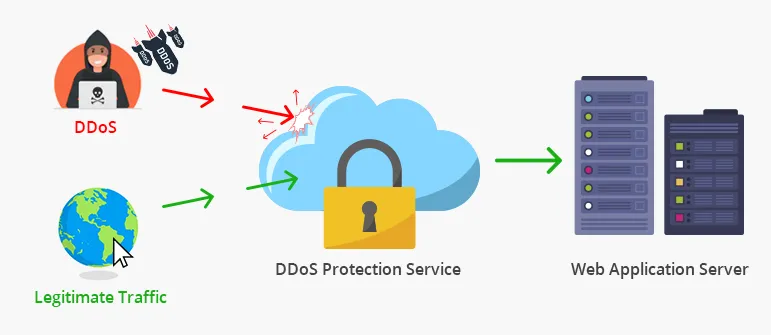
Information: To choose the most appropriate DDoS protection solution for your website or application, it is recommended that you consult a security professional and conduct a specific assessment of your needs.
DDoS Protection Solutions
Modern DDoS Protection Architecture

DDoS Protection Types Comparison

feature Cloud Based On-Premise hybrid
Installation Time fast slow Orta
Startup Cost low high high
Scalability high limited high
L3/L4 Protection excellent good excellent
L7 Protection good excellent excellent
Data Privacy low high Orta
Delay Time Orta low Orta
Maintenance Need low high Orta

Questions to Ask When Choosing a DDoS Protection Solution

  • Capacity: What is the maximum DDoS traffic the solution can absorb?
  • Response Time: How long does it take between attack detection and mitigation initiation?
  • Attack Types: What types of attacks does it protect against?
  • False Positives: How does it minimize false positives?
  • SLA: What are the service level agreement terms?
  • Additional Services: Does WAF offer additional security features like CDN?
  • Raporlama: Does it provide detailed incident reporting and analytics?
  • Support: Is 7/24 technical support and expert assistance available?

"After switching to our hybrid DDoS protection strategy, we can effectively manage both small and large-scale attacks. Thanks to our on-site solution, we can instantly block small attacks, while automatically switching to cloud protection when the attack exceeds our capacity. Thanks to this strategy, we have not experienced any interruption in the 12 major attack we have experienced in the last year."
- CTO of an e-commerce platform

What to Do After a DDoS Attack

After a DDoS Attack
Analysis After DDoS Attack

Timeline After DDoS Attack

First 24 Hour
  • Continue monitoring systems
  • Collect forensic evidence
  • Notify affected parties
24-72 Saat
  • Assess the full impact of the attack
  • Update initial security measures
  • Be alert for possible attacks again
1-2 Hafta
  • Perform detailed attack analysis
  • Create the improvement plan
  • Plan long-term measures
1 Month and After
  • Strengthen security infrastructure
  • Update DDoS response plan
  • Complete staff training

Step by Step Path to Follow After a DDoS Attack

Once a DDoS attack has been recovered, a series of actions must be taken to restore systems and better prepare for future attacks. The steps below provide a comprehensive roadmap to follow after a DDoS attack.

Remember: DDoS attacks often recur. Statistics show that 80% of organizations subjected to a DDoS attack are targeted again within 12 months. Therefore, post-attack recovery and preparation steps are vital.
1

Verify Systems Are Completely Restored

Once the attack is over, make sure all systems and services are working normally:

  • Check the status of all network components (servers, routers, firewalls)
  • Test accessibility of web applications and services
  • Evaluate system performance and response times
  • Make sure there is no permanent damage or problems
2

Analyze the Attack in Detail

Gather as much information as possible about the nature, magnitude and effects of the attack:

  • Collect log files and system monitoring data
  • Determine the type, timing and duration of the attack
  • Identify the source of the attack (if possible)
  • Identify systems and services targeted by the attack
  • Assess how effective your defense mechanisms are
3

Notify Affected Parties

Create a transparent communication strategy and inform relevant parties:

  • Inform senior management about the attack and its effects
  • Provide appropriate information to your customers or users
  • Notify business partners and suppliers if necessary
  • Make necessary notifications to regulatory bodies (depending on your industry)
4

Identify Vulnerabilities and Weaknesses

Identify weak points and defense deficiencies that arise during the attack:

  • Investigate the reasons for failures in your defense systems
  • Evaluate your attack detection and response process
  • Identify weak points in network architecture and infrastructure
  • Identify deficiencies in staff response processes
5

Update Your DDoS Response Plan

Revise your response plan based on what you learned from the attack:

  • Update detection mechanisms and alarm thresholds
  • Improve and optimize response procedures
  • Review communication channels and escalation processes
  • Clarify roles and responsibilities for a more effective response
6

Strengthen Infrastructure and Defense Systems

Make technical improvements to strengthen your defenses against future attacks:

  • Update or upgrade your existing DDoS protection solutions
  • Increase network capacity and flexibility
  • Strengthen backup systems and disaster recovery plans
  • Improve monitoring and early warning systems
  • Add additional security technologies or services if necessary
7

Update Staff Training and Conduct Drills

Get your team better prepared for future attacks:

  • Update training content in line with identified deficiencies
  • Organize special training for the response team
  • Plan and execute realistic DDoS drills
  • Communicate updated response procedures to all relevant personnel
8

Documentation and Reporting

Create comprehensive documentation about the attack:

  • Prepare a detailed report of the attack (time, type, impact, response)
  • Document lessons learned and suggestions for improvement
  • Save all changes and updates made
  • Archive data for future reference
"The post-DDoS attack process is not just about restoring systems to their normal state, but also about becoming stronger against future attacks. Every attack is a learning opportunity to strengthen your security strategy and infrastructure." - Cyber Security Expert

Frequently Asked Questions

What is the difference between DDoS and DoS attacks?

While DoS (Denial of Service) attacks come from a single source, DDoS (Distributed Denial of Service) attacks are carried out simultaneously from multiple sources. DDoS attacks are generally larger in scale and harder to block.

How do I know if I'm experiencing a DDoS attack?

You may see symptoms of abnormal slowdown in your systems, inaccessibility of your website, difficulty accessing certain services, abnormal traffic increase and resource consumption. Your monitoring tools can also alert you to abnormal traffic patterns.

What is the most economical method to protect against DDoS attacks?

Free or budget plans from CDN services like Cloudflare can provide cost-effective DDoS protection for small and medium-sized businesses. In addition, configuration-based measures such as basic rate limiting and traffic filtering can also be implemented without requiring extra hardware.

What should I do during a DDoS attack?

First, verify the situation and try to determine the source and type of attack. If you have a DDoS response plan in place, start implementing it now. Contact your ISP or DDoS protection provider. If necessary, take immediate measures to route or filter traffic. Finally, keep detailed records throughout the incident.

Can DDoS attacks be legally pursued?

DDoS attacks can be pursued legally and are considered serious crimes in many countries. However, attackers are often difficult to detect because attacks are carried out through large numbers of zombie computers (botnets). In case of a serious attack, it is recommended that you contact law enforcement and cybercrime units.

Top
