 Turkey (Turkish)
 Germany (German)
 Worldwide (English)


Paperless-ngx
a lean and fast startValidate the official installation, licensing, backup and upgrade documentation for Paperless-ngx during the pilot.

 Halkali merkez neighborhood fatih st ozgur apt no 46 , Kucukcekmece , Istanbul , 34303 , TR
A comprehensive comparison of Paperless-ngx, Stirling PDF and Tesseract OCR based on data ownership, resource use, security, backup, upgrades and operational cost rather than a feature checklist.
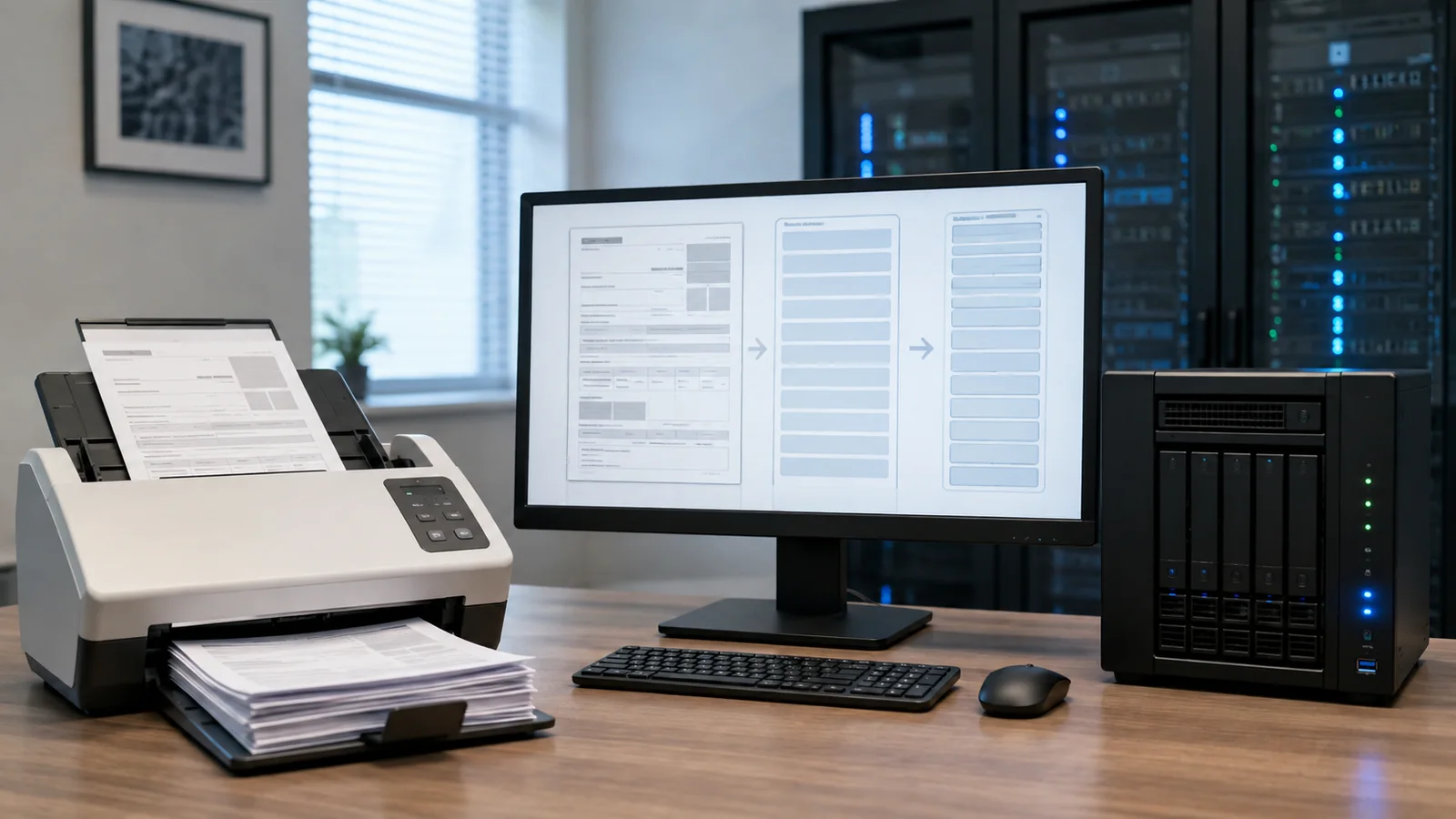
No single tool fits every organization. Because original documents, OCR text, tags, permissions and intake queue are critical, choose by recovery objectives, authorization model and operating capacity—not screenshots or popularity.
| Technical option profiles | Capacity planning | Security controls | Backup and rollback |
|---|---|---|---|
| Paperless-ngx | a lean and fast start | MFA · TLS · least privilege | DB · files · secrets · restore test |
| Stirling PDF | enterprise process and permissions | MFA · TLS · least privilege | DB · files · secrets · restore test |
| Tesseract OCR | integration-heavy teams | MFA · TLS · least privilege | DB · files · secrets · restore test |
Validate the official installation, licensing, backup and upgrade documentation for Paperless-ngx during the pilot.
Validate the official installation, licensing, backup and upgrade documentation for Stirling PDF during the pilot.
Validate the official installation, licensing, backup and upgrade documentation for Tesseract OCR during the pilot.
Expose only ports 80/443 through a reverse proxy; keep the application, database and queue on a private Docker network or VLAN. Test TLS termination, security headers, rate limits and real-client IP forwarding. Paperless-ngx, Stirling PDF and Tesseract OCR may solve the same category while having different component counts and failure surfaces.
Capacity depends on more than users: concurrency, original documents, OCR text, tags, permissions and intake queue, background jobs, indexing and retention alter CPU, RAM and NVMe requirements. Measure p95 latency, peak memory, disk IOPS and daily growth during a pilot, then retain at least 30 percent headroom.
Require MFA for administrators, keep a separate emergency account and use SSO where practical. Remove defaults and overprivileged API tokens; store secrets outside the repository. Restrict administration by IP or VPN and export audit logs to a separate target.
A database dump alone is incomplete. Back up original documents, OCR text, tags, permissions and intake queue, configuration, encryption keys, uploaded files and exact version information as one recovery set. Use 3-2-1 copies, encrypted off-site storage and recurring isolated restore tests.
Pilot with representative users and verify SSO, email, webhooks, mobile clients and export paths. Document a change freeze, final sync, reduced DNS TTL, acceptance test and rollback threshold. Recheck licensing and extension coverage in official documents before production.
docker compose psdu -sh /srv/documentsfind /srv/documents -type f | wc -ltesseract --versionScore Paperless-ngx, Stirling PDF and Tesseract OCR in a small pilot against your identity, integration, backup and reporting requirements.
There is no trustworthy universal number. Treat vendor minimums as a starting point and size from pilot measurements plus headroom.
Yes when versions are pinned and persistent volumes, health checks, log collection, backup and controlled upgrades exist.
Read release notes, verify backup, test in staging and preserve a route to the previous image.
Restore to an isolated target, sign in, compare record counts and verify sample file integrity.
NVMe VPS is practical for many initial deployments; high IOPS, large storage or GPU demand may justify dedicated/GPU infrastructure.
Share the user count, data growth, backup target and expected concurrency so the resources and architecture can be sized.